Sublime cinema: “Angely revolyutsii” [2014 Russia]

Angels of Revolution (2014, Russia)There’s now plenty of proof that Aleksey Fedorchenko has a deep reverence and fascination for the customs of ethnic tribes that cohabit his motherland. While his moving Silent Souls (2010) touched on the funerary rituals of the Merya, and his richly exotic anthology Celestial Wives of Meadow Mari (2012) boisterously celebrated Mari womanhood, his more recent “Angely revolyutsii” [Eng. Title: Angels of Revolution] is an unfettered re-imagining of a factual Soviet suppression of the Siberian Nentsy and Khanty people during the Kazym Rebellion.

Darya Ekamasova in "Angels of Revolution" (2014, Russia)But Fedorchenko, being who he is, doesn’t present the film with a conventional historical narrative, but rather like a poetic retelling of a myth; exercising generous artistic license while presenting his facts. There are true-life characters nevertheless in the film, like Polina (Darya Ekamasova), a noted revolutionary and performance artist, who is assigned the task of ‘civilising’ the aforementioned tribes; by encouraging them to embrace Soviet ideology, join mainstream society, and give up their pastoral lifestyle and move into permanent homes in their newly built town.

Darya Ekamasova in "Angels of Revolution" (2014, Russia)To this effect, she enlists the help of four fellow avant-gardists; film maker Pyotr (Pavel Basov), photographer and sculptor Zakhar (Georghi Iobadze), architect and coffin-maker Nikolay (Konstantin Balakirev), and theatre director Smirnov (Aleksey Solonchev). Together, they set off to the Taiga on a mission that Polina hopes would intellectually enlighten the tribes and make them appreciate modern art.

"Angels of Revolution" (2014, Russia)But the Khanty are aloof to this enforced ‘meeting of civilisations’, and at times barely tolerate their uninvited presence. While they might have been mildly bemused watching their works and antics at the beginning, they soon grow tired of them and refuse to ‘join the collective’, and events take an inevitably tragic turn once their respective irreconcilable positions are established, and the State decides to have the last say…

Darya Ekamasova in "Angels of Revolution" (2014, Russia)There is more to the film than meets the casual eye – be it artistic, political, or philosophical. Federchenko doesn’t make it any easier for us by refusing to feed us the historical pretext for the conflict. In my case, one had to score through festival interviews and the wiki to get acquainted with collectivisation during the early days of Soviet Union. It is ironic that the avant-garde artists, themselves a minority who’ll soon to be ‘collectivised’ by the state, were press-ganged into persuading other minorities. It is also worrying to see that states; red, blue, or whatever their hue, have found it irresistible to homogenise their entire population to control them better – it shows how incredibly fragile human civilisation has always been.

"Angels of Revolution" (2014, Russia)Fedorchenko’s film provokes debate on ethics, ideology, and humanism itself. And after the final scene in an apartment in present-day Kazym, in which we see an elderly Khanty woman singing a tribal song while looking into the camera, we are left wondering who the angels of revolution indeed were – were they the avant-garde artists who were sacrificed for a now defunct Soviet state, or are they the disparate tribal cultures that still survive, albeit by the skin of their teeth, a quarter of a century after the revolution itself has ended.

"Angels of Revolution" (2014, Russia)To say that the cinematography and production design is exceptional would be stating the bleeding obvious – one can hold a photographic exhibition by simply blowing up some of the film’s key frames and mounting them on a wall. They would need neither titles nor descriptions – quirky, surreal, humorous, and tragic, they’d be probing artworks on their own. Of course, good photography doesn’t equate to good cinematography, but films with a master like Fedorchenko at the helm make a pleasant exception. A particularly mesmerising scene is still haunting – where Pyotr projects his film on a cloud of smoke bellowing from a wintry night’s campfire. I could go on – but will end by stating that this gem is Highly Recommended Viewing..!


The Nudity: Polina Aug
Polina Aug plays Anna, Zakhar’s model and muse, and briefly appears topless during one of the photo shoots.

Polina Aug in "Angels of Revolution" (Angely revolyutsii), Russia, 2014.

Polina Aug in “Angels of Revolution” (Angely revolyutsii), Russia, 2014.

.

Continue reading

Posted in Aleksey Fedorchenko, Russian Cinema | Tagged , , , | Leave a comment

Vasilis Georgiadis: From the ‘Golden age’ of Greek cinema

Vasilis Georgiadis can arguably represent the ‘golden age’ of Greek cinema between the mid-fifties and the late-sixties, during which film makers were generally allowed a degree of creative freedom never seen before. This is mainly because his films were decidedly ‘mainstream’ in their attempt to connect to ‘common people’, and were also executed with a great degree of craftsmanship and care. Two of his films from the period that are relevant to this site are “Ta kokkina fanaria” [Eng. Title: The Red Lanterns], and “To homa vaftike kokkino” [Eng. Title: Blood on the Land]. Incidentally, these are also among the very few Greek films that were nominated for Oscar during its ‘Golden age’.


1. Ta kokkina fanaria [1963]

Mairi Hronopoulou in "Ta kokkina fanaria" (1963)Set in the southern port of Pereas, the film delves into the lives and fortunes of prostitutes in one of the brothels of the town’s red light district – one that has been marked for demolition by civic authorities in order to make way for new development.


Jenny Karezi and Dimitris Papamichael in "Ta kokkina fanaria" (1963)We follow Eleni (Jenny Karezi), Mary (Mairi Hronopoulou), Anna (Alexandra Ladikou) and others who are managed under the watchful eye of Madam Pari (Despo Diamantidou) and pimp Doris (Kostas Kourtis). Eleni is a Romanian immigrant who was abandoned by her lover at the hotel next door, and has eventually been forced into the profession to survive. But she occasionally manages to escape her routine to meet up with a man (Dimitris Papamichael) she’s in love with, but who’s totally unaware of what she does for a living.

Mairi Hronopoulou and Faidon Georgitsis in "Ta kokkina fanaria" [1963]Mary takes a shine to a young lad (Faidon Georgitsis) who first visits her as a client. He falls in love with her and also proposes marriage, but Mary, whilst also in love, is only too aware that it wont be that easy, either for his family to accept a prostitute for a bride, or for her to give up the relative independence she presently possesses in charting her own life.


Manos Katrakis and Alexandra Ladikou in "Ta kokkina fanaria" aka "The Red Lanterns" [1963]Anna’s elderly client (Manos Katrakis) is captain of a merchant vessel who’s about to retire. When he proposes marriage, and also evinces a desire to help raise a family, Anna had to disclose a closely held secret that she is already mother to a twelve year old, and would consider marriage only if he’s willing to accept them both. Whilst the captain is happy to accommodate the two, things don’t turn out as intended.

Iro Kyriakaki in "Ta kokkina fanaria" (1963)The film is notable for its star cast – almost everyone in the film were household names when the film was made. Apart from the plot, the film makes some pertinent observations of a changing society and the hopes of the poor, represented by the brothel’s middle aged live-in maid (Iro Kyriakaki) who now needs to make a new start of her own. Her character is probably the least developed among the rest, but the Italian neorealism inspired film is nevertheless honest in its intentions and makes a concerted attempt at addressing some of the social issues of the time. Recommended Viewing..!

Amazon DVD Link [PAL]


The Nudity: Eleni Anousaki
Eleni Anousaki plays Myrsini, a young teenager who takes to her new profession like a duck to water. She’s topless in a scene, and teases the pimp after he barges into her room while changing.

Eleni Anousaki in the Greek drama, "The Red Lanterns" aka "Ta kokkina fanaria" [1963].

Eleni Anousaki in the Greek drama, “The Red Lanterns” aka “Ta kokkina fanaria” [1963].

.

2. To homa vaftike kokkino [1966]

Mairi Hronopoulou in "To homa vaftike kokkino" [1966]Set in the rugged hinterland of Thessaly in early twentieth century, “To homa vaftike kokkino” [Blood on the Land] paints an astonishing portrait of a rural Greece that has yet to enter the modern era save the solitary railway line connecting it to the outside world. The film is essentially about a feud among siblings within a noble family.


Nikos Kourkoulos and Manos Katrakis in "Blood on the Land" [1966]The film begins with a youthful Odysseas (Nikos Kourkoulos) returning home after a stint in prison for abetting a revolt among peasants working in the family land. After the revolt was put down by force and several peasants killed, the patriarch (Manos Katrakis) had fired the entire workforce and taken on labourers from outside their territory with the help of his elder son Rigas.

Giannis Voglis in "To homa vaftike kokkino" [1966]Rigas (Giannis Voglis) is the polar opposite of Odysseas – brutal, predatory, and dictatorial, who actually believes he owns the people working in the land. He detests Odysseas for wanting to distribute their ancestral land among the peasants, and refuses to reconcile with him despite their father’s pleas.


Mairi Hronopoulou and Nikos Kourkoulos in "To homa vaftike kokkino" [1966]When Odysseas convinces his father to allow the ousted peasants to return back to the land for work, Rigas resists and fails. The peasants have also found a new leader in Eirini (Mairi Hronopoulou), the daughter of a killed peasant leader, who is literate and can negotiate better working terms on their behalf. What starts off as ideological warfare between the brothers turns into rivalry over Eirini even though she only wants to be with Odysseas, and their feud will reach its anticipated denouement in a guns-blazing finale…

From "To homa vaftike kokkino" aka "Blood on the Land" [1966, Greece]One wouldn’t go as far as calling this Greece’s equivalent of “Gone With The Wind”, but as a pastiche of Socialist Realism, it is grand nonetheless, drawing on themes from Mexican Westerns and their own classical literature. Not only was it well received, as expected, in the Eastern Block countries, it also found favour among Greek audiences and film festivals. With major stars among the cast, the film was a Greek cinematic landmark of its time, and rarely would such an ambitious project – both in budget and scope, be undertaken by Georgiadis. The black and white cinematography, although excellent, doesn’t quite do the spectacular terrain enough justice, but for those interested, the same location can be seen majestically captured in colour in a more recent film (Metéora).

Amazon DVD Link [PAL]


The Nudity: Zeta Apostolou and Mairi Hronopoulou
Zeta Apostolou, already legendary for her racy roles when the film was made, plays an opportunistic vixen sleeping her way out of misery – she appears nude in two scenes. There is also very brief hint of nudity from major star Mairi Hronopoulou when her character is caught bathing in a pond during a scene shot from a distance.

Zeta Apostolou and Mairi Hronopoulou in "To homa vaftike kokkino" aka "Blood on the Land" (1966)

Zeta Apostolou and Mairi Hronopoulou from the Greek Western “Blood on the Land” [1966].

.

Continue reading

Posted in Greek Cinema | Tagged , , , , | Leave a comment

A film review: “The Garden of Earthly Delights” [2004 Poland, UK]

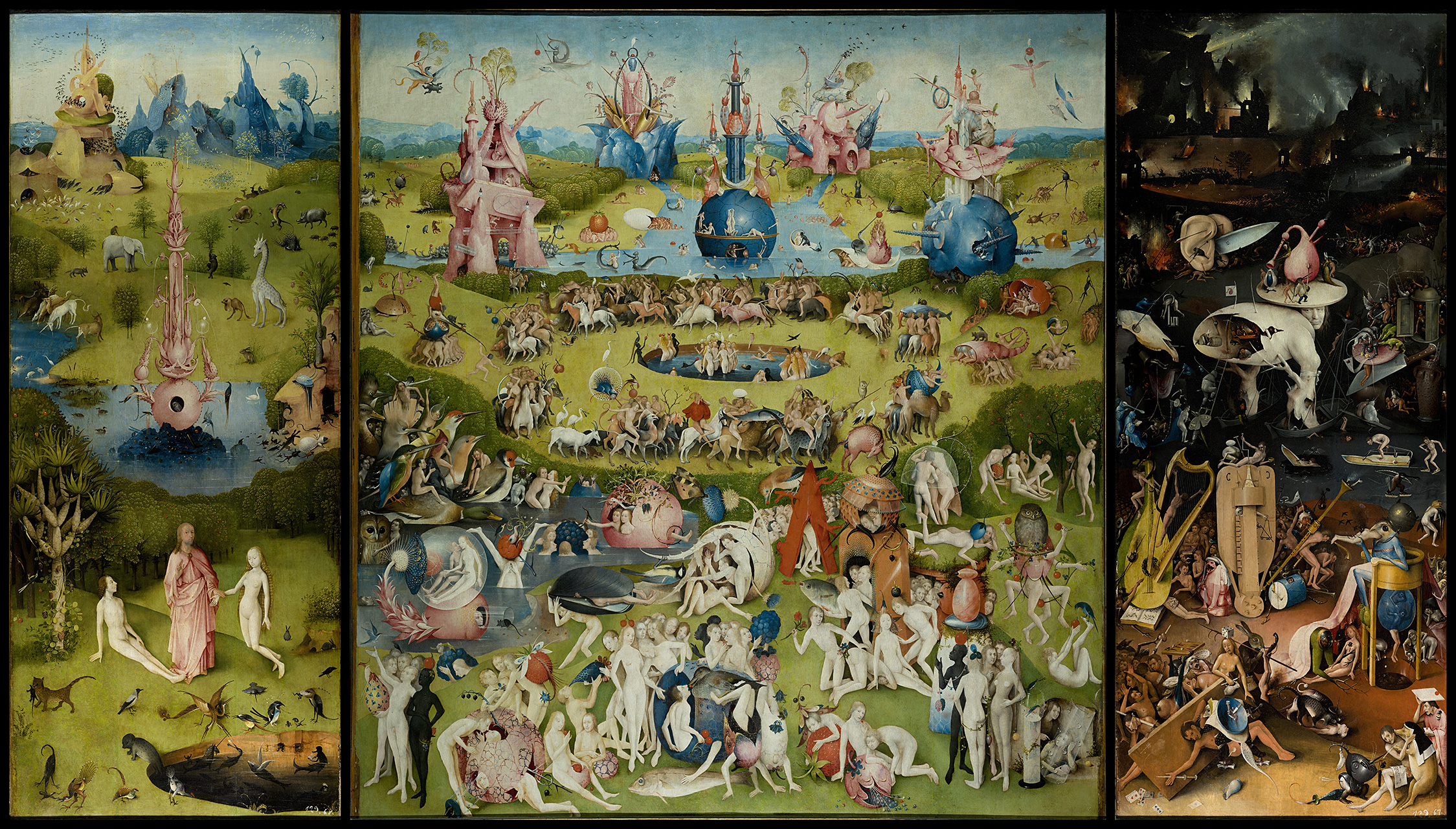
Polish auteur Lech Majewski created a triptych (in film) by drawing inspiration from some of the well known medieval masterworks. The first – what he considers to be the ‘left panel’, is based on the fifteenth century Dutch master Hieronymus Bosch’s own famed triptych “The Garden of Earthly Delights“, which also serves as the film’s title (the ‘central panel’ – The Mill and the Cross (2011), was based on Bruegel’s painting named The Procession to Calvary, and the ‘right panel’ Onirica – Field of Dogs (2014), was based on Dante’s Divine Comedy). He considers the trilogy as a personal spiritual quest to connect with the past and relate to the present world.

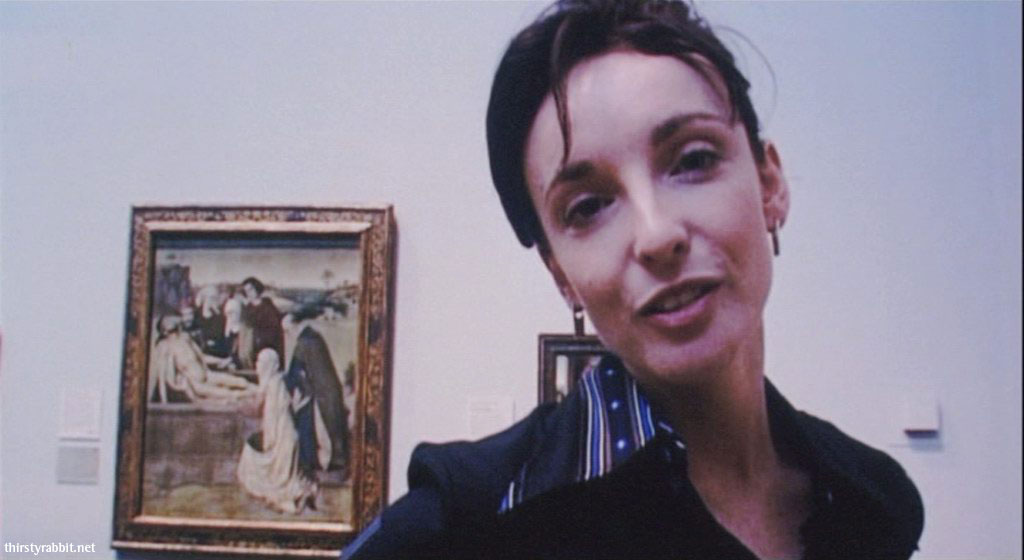
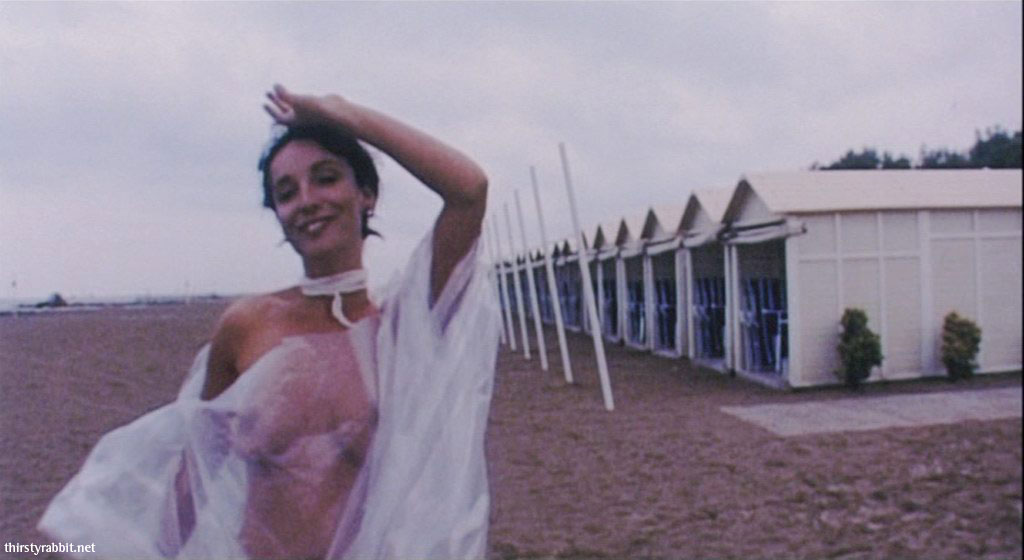
Claudine Spiteri in The Garden of Earthly Delights (2004)Based on Majewski’s novel “Metaphysics”, we are introduced to Claudine (Claudine Spitery) and Chris (Chris Nightingale) as Londoners who met and fell in love. While Claudine is an art historian with a passion for Bosch’s eponymous painting, Chris is a boat engineer obsessed with filming Claudine with his handheld camera – in the process, providing Majeswki with his working material.

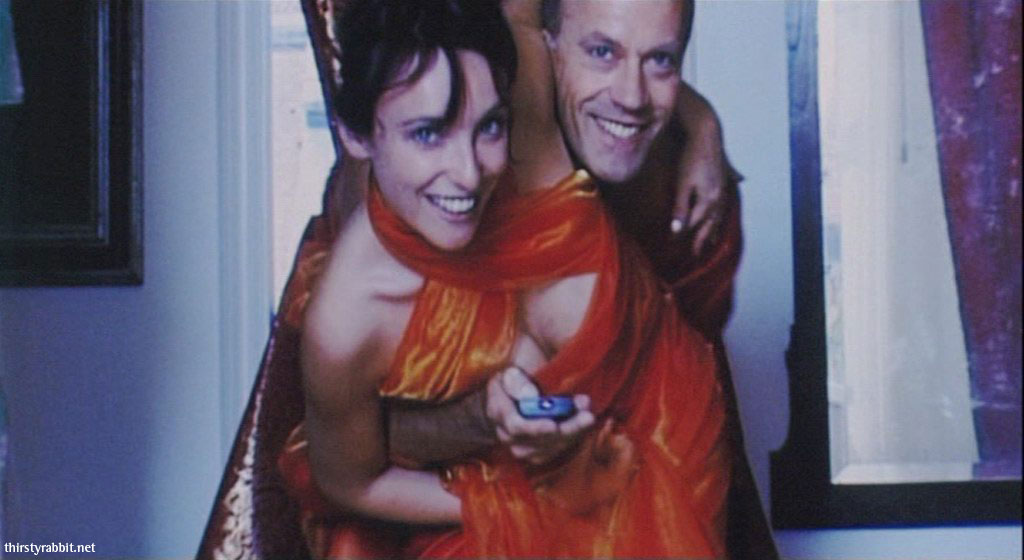
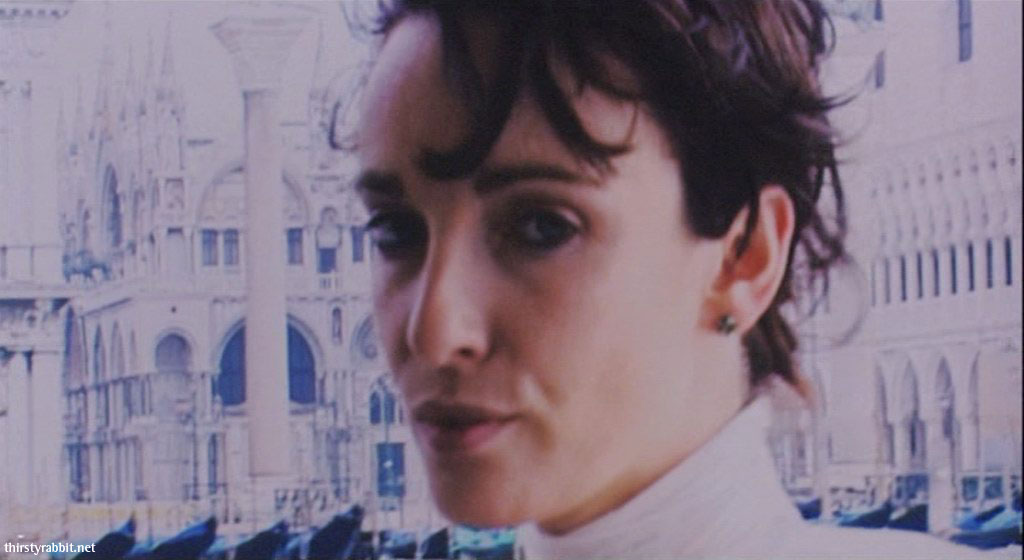
Claudine Spiteri and Chris Nightingale in "The Garden of Earthly Delights" (2004)When Claudine confides in Chris about her terminal illness, and the fact that she had been given only a few months to live, they decide to move to Venice and spend their final days together. With the help of Chris and his camera, Claudine propounds her own understanding of Bosch’s painting, and hopes to leave behind a worthwhile record of her existence through the personal film.

Claudine Spiteri and Chris Nightingale in "The Garden of Earthly Delights" (2004)She offers a counterpoint to Dante’s journey through purgatory in his Divine Comedy, by meticulously enacting elements of Bosch’s much more uplifting vision of ‘heaven’ on earth, and aims to experience her own Utopia during the remaining days of her life. It is not as much the religious, but the metaphysical journey, that she hopes will make her life more meaningful…

Claudine Spiteri in "The Garden of Earthly Delights" (2004)The experimental film is shot like an intimate video diary – as Majewski puts it, like a “Black Box recording” of a tragic flight, capturing all the raw data regardless of significance. In order to add authenticity to the couple’s intimacy, it was also filmed for the most part using a touristy camera, often with actors themselves as the camera crew. This was a gamble on his part that might not have helped the film commercially despite respectable performances from the main actors, particularly Ms. Spiteri, who portrays her character with spontaneity and grace.

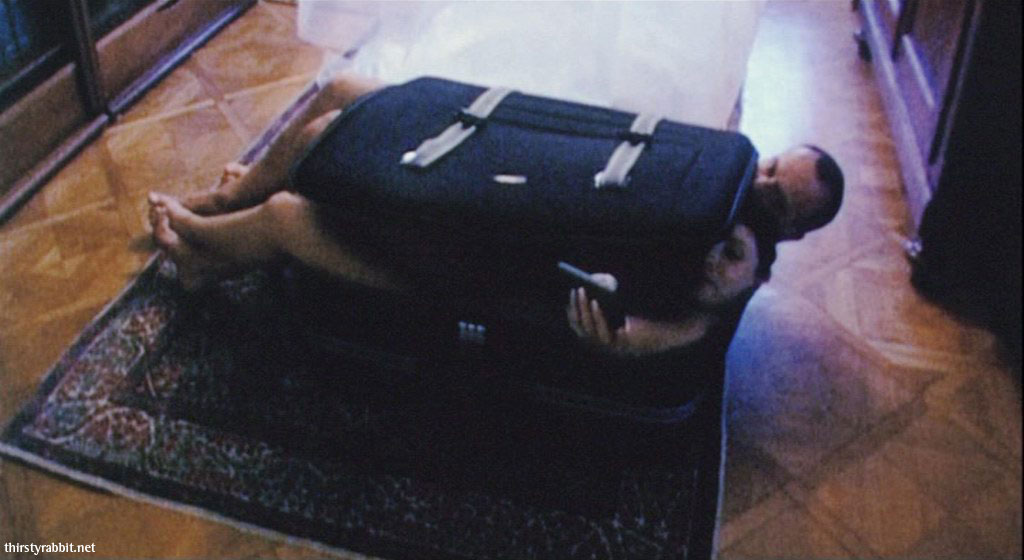
Claudine Spiteri in The Garden of Earthly Delights (2004)My main concern with the film is the mismatch between the amateur filming (by actors), and the professional editing (handled by Majewski himself) within the context of a formal narrative – it only makes the photography appear more amateurish. And considering the fact that almost the entire footage is shot in this manner, there are times when watching the film also becomes a bit of an endurance, like a host forcing upon guests his personal home video that they might not be so keen on watching. The same excellent subject could perhaps have been shot professionally without sacrificing any of the intimacy that Majewski intended to get across.

The Garden of Earthly DelightsRegardless of how the audience react to the film, they will certainly have to acknowledge the invigorating – almost scholarly, interpretation it offers on Bosch’s eponymous painting that continue to divide opinion among art historians today. At least in my case, I’ll be looking at this painting from an entirely new perspective when I revisit the Prado museum. For anyone even with a passing interest in art, the film should be Recommended Viewing..!

Amazon.it DVD Link [PAL] | Amazon.com DVD Link [NTSC]
(Both have original English audio)


The Nudity: Claudine Spiteri and Chris Nightingale
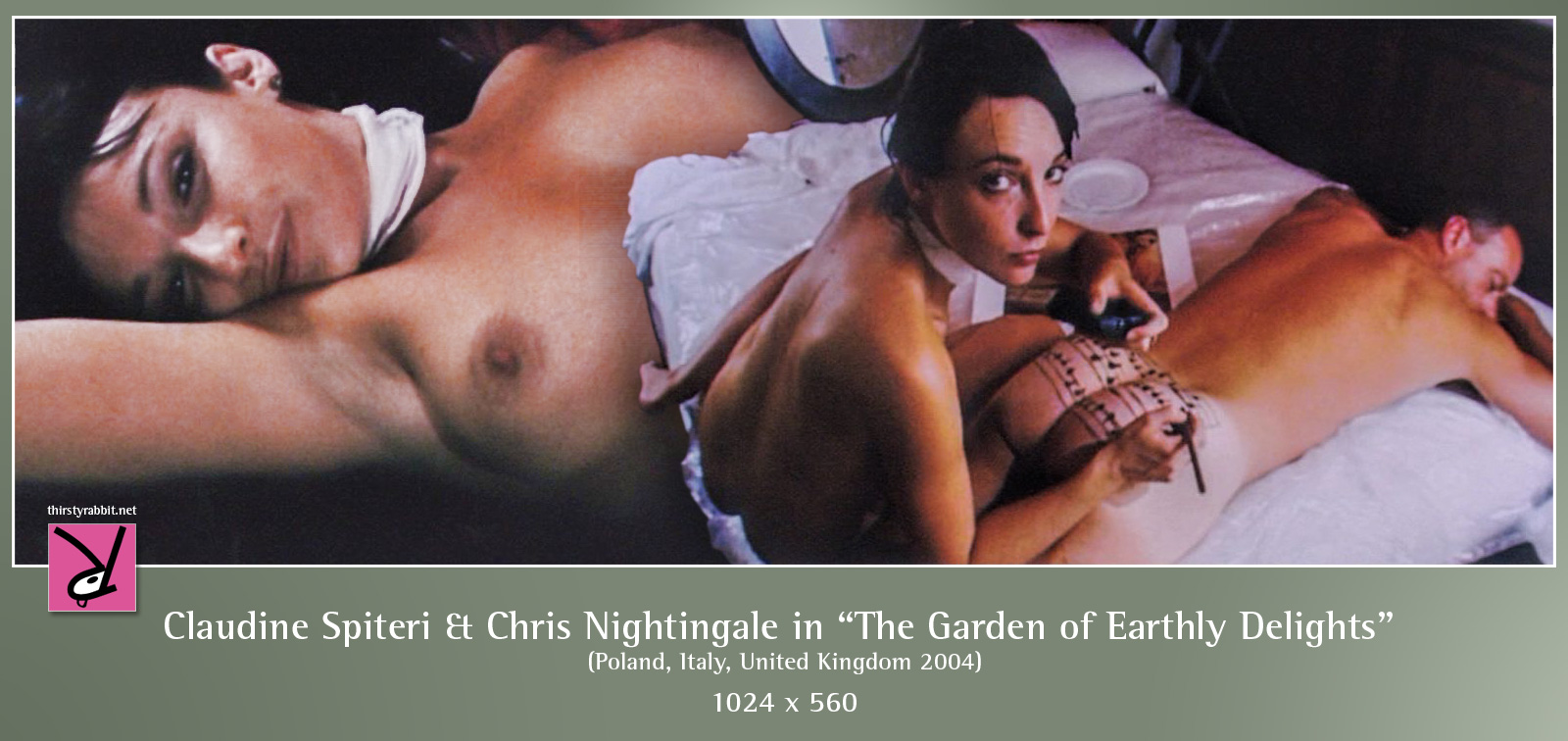
The film features intermittent nudity, mostly from Claudine Spiteri, as her character goes about enacting themes from Bosch’s painting.

Claudine Spiteri and Chris Nightingale nude in The Garden of Earthly Delights 2004

Claudine Spiteri and Chris Nightingale in “The Garden of Earthly Delights”, (2004).

.

Continue reading

Posted in Lech Majewski, Polish Cinema | Tagged , , , | Leave a comment

A gentle summer breeze: “Ventos de Agosto” [2014 Brazil]

Gabriel Mascaro makes a refreshing feature film début with the quirky slow-burning drama “Ventos de Agosto” [Eng. Title: August Winds]. Yes, it’s a drama only in the broadest sense of the word, but that shouldn’t distract from the high traditions of film making that it draws from.

Dandara de Morais in "Ventos de Agosto" [2014]Set in a remote northeastern coastal village of Brazil, the film focuses on the lives of two young people; one is Shirley (Dandara de Morais) – a rock music loving city girl who had moved to the village to look after her elderly grandmother. For a living, she drives a tractor transporting coconuts from a local plantation, but she yearns to become a tattoo artist and practices her skills on the unfortunate farm animals at her home.

Geová Manoel Dos Santos and Dandara de Morais in "Ventos de Agosto" [2014 Brazil]Shirley goes out with a village lad and co-worker named Jeison (Geová Manoel Dos Santos). They spend some of their free time in a little dinghy on the sea, where Jeison free-dives to catch octopus and other sea creatures while Shirley catches some sun (until this film, I never knew a fizzy drink could double up as sunblock!). On occasion, Jeison recovers unusual artefacts like skull and bones from the sea bed, whose history they’ll try to identify by enquiring around the village.

"Ventos de Agosto" [2014 Brazil]A meteorologist researching the pattern of trade winds arrives in their village in August, since that is also the month for tropical storms and high tides in the area, and he sets about recording the sound of the winds as part of his study. The village folk erect sand barriers to try and protect their properties in anticipation of the torrential downpours and curiously watch the meteorologist go about his work.

"Ventos de Agosto" [2014 Brazil]Shortly after, a bloated corpse half-eaten by fish surfaces, and Jeison takes it upon himself to become its custodian until the police arrive. But they don’t, and Jeison will eventually have to do something about the rotting corpse at his doorstep. We watch the unfolding drama as the elemental forces of nature – life, death, the sea, and the August winds play out their parts unstintingly and unapologetically, in a world that is changing…

"Ventos de Agosto" (2014 Brazil)Much of the film is observational – like a documentary, but serves us ample opportunity to reflect upon what we see on the screen. In a style reminiscent of Corn Island, but altogether more celebratory, witty, and life affirmative; it is a beautiful portrait of a corner of rural Brazil that we don’t often see but which has universal appeal. Gabriel Mascaro is an exciting director whose work we need to keep an eye on, and I’m already looking forward to his second feature that should be out soon. Needless to say, the film is Highly Recommended Viewing..!


The Nudity: Dandara de Morais and Geová Manoel Dos Santos
There are a couple of scenes that feature some delightfully frank nudity; the first is when Shirley sunbathes nude in the boat, and the second is after Shirley and Jeison make love on top of harvested coconuts in their tractor truck. They’re worth checking out!

Dandara de Morais and Geová Manoel Dos Santos in "Ventos de Agosto" aja "August WInds" (2014 Brazil)

Dandara de Morais and Geová Manoel Dos Santos in “Ventos de Agosto”
aka “August Winds” [2014 Brazil].

.

Continue reading

Posted in Brazil, Gabriel Mascaro | Tagged , , , , | 2 Comments

A leftover life to kill: “Eureka” [1983 United Kingdom, USA]

For a long time, it had been fashionable for critics to trash every Nicolas Roeg film made after “Bad Timing”. Thankfully, we now have a whole new generation that’s not only rediscovering his later films, but also reevaluating them within the context of his entire body of work. “Eureka” (1983), partly inspired by a true story, was the first of his ‘later’ films to be routinely overlooked due to the changing expectations of a fickle audience.

Gene Hackman in "Eureka"The film follows the fortunes of Jack McCann (Gene Hackman), a perseverant gold prospector made good after striking it rich in the frozen wilderness of Canada. Split into three distinct parts, the first part of the film is dedicated to McCann’s heroic quest amongst the debris of broken hearts and shattered spirits that came seeking fortune before him. The surreal journey he undertakes takes on a mythic proportion as elements of magic and providence are woven into the narrative.

Gene Hackman and Theresa Russell in "Eureka"The film fast forwards twenty years into the future immediately after, where McCann is the wealthiest man in the world, watching helplessly as his daughter Tracy (Theresa Russell) falls madly in love and marries a handsome idler named Claude (Rutger Hauer) – he suspects that Claude might have married her only for the money.

Gene Hackman, Theresa Russell, and Mickey Rourke in "Eureka"Around the same time, Miami businessman Mayakofsky (Joe Pesci) wants to convince McCann into selling his Caribbean island named Eureka to set-up a Vegas-style casino town, with the help of McCann’s close associate Charlie Perkins (Ed Lauter), and using his lawyer-sidekick Aurelio D’Amato (Mickey Rourke) as the go-between. He devices dubious methods to obtain the property, but McCann isn’t interested in selling it.

Theresa Russell and Rutger Hauer in "Eureka"The final part of the film deals with the aftermath of McCann’s horrific murder and the shoddy trial that ensues when Claude is accused of murdering his father-in-law. Claude argues his own defence by calling in Tracy as a witness, but will learn to his discomfort that Tracy, far from being his ‘trophy’ wife, was the one to initiate the seduction – it was she who chose him, rather than the other way around.

Tracy defends his innocence by proclaiming his incapacity to hold any true convictions in life, let alone love. Through her courtroom testimony, she also summarises her slain father’s life with a surprising insight that will go some distance in completing the portrait of the real McCann behind the adventurer and doting father of the first two parts of the film…


Defending “Eureka”:
If this event-rich film would’ve started off as an action adventure, and progressed into a tragedy-filled family melodrama, some critics would’ve probably been satisfied with its outcome, and perhaps even an Oscar red-carpet would have beckoned if a ‘final justice’ of sorts for the tragedy had been served.

Gene Hackman in "Eureka"But this is a Nicolas Roeg film – whose stylised film narrative and surreal moments, briefly interspersed with tantalising, but brilliant glimpses into the psychological, philosophical, and mystical aspects of the human psyche – into reasons behind motives, are as adored and appreciated in films like Walkabout and Don’t Look Now. “Eureka” is no different in its approach from his other better appreciated films, and it is baffling to come across suggestions that Roeg could’ve gone about it differently.

Gene Hackman in "Eureka"For Roeg, finer details, or even the plausibility of a plot had always been secondary; instead he was more interested in the effect that events have on the characters concerned. McCann is a man of action and very few words, and once his destiny of finding gold was complete, there was nothing left for him to achieve – in his own words, “Once I had it all. Now I just have everything”. Hence there was need for a mouthpiece – Tracy in this instance, to elucidate McCann’s reasons for struggling to negotiate his remaining days.

Gene Hackman in "Eureka"There’s a reason why twenty years of his life following the gold discovery is not shown. The film is essentially about the leftover part of McCann’s life; it is not about seeing him accumulate wealth, get married and purchase whole islands. Also, without going into the details, the cryptic final scene with ‘unanswered questions’ is indeed typical of Roeg. You’re free to interpret and judge the characters appearing in the final scene in your own way; all that Roeg wants to convey is that Eureka “will be given away”. Considering the problems the film faced during its distribution, we don’t know if the final cut that we see is also the way Roeg intended, but even as it stands, this is an exceptional (and woefully underrated) film by Nicolas Roeg that’s Highly Recommended Viewing..!

Amazon Blu-ray + DVD Link
I’m thankful for this excellent Blu-ray release – the copy I had so far was a poorly transferred letterboxed NTSC DVD. It is about time the rest of Nicolas Roeg’s films are also remastered and brought back to life for a new audience.


The Nudity: Theresa Russell, Rutger Hauer, Emma Relph, and Ann Thornton
Theresa Russell is at her most elegant and sensual self in this film, and also appears nude or partially nude in at least five scenes. For a Dutchman, Rutger Hauer’s English diction is impressive, and he too appears nude in one scene. Emma Relph and Ann Thornton play wives of colonial British officers who get more than they bargained for after Claude takes them to an outlandish ‘voodoo orgy’, if ever there was one, where an uncredited actress is also seen trying to swallow or do some harm to a hapless python – bloody expats! 🙂

Theresa Russell and Rutger Hauer in Nicolas Roeg's "Eureka" [1983]

Theresa Russell and Rutger Hauer in Nicolas Roeg’s “Eureka” [1983, UK/USA].

.

Continue reading

Posted in Nicolas Roeg, United Kingdom | Tagged , , , , , | 2 Comments