Esther Nubiola and others in “Tirante el Blanco” BR720 [Spain, UK 2006]

Veteran director Vicente Aranda gives us his take on events preceeding the fall of the Byzantine Empire in his lush 2006 adaptation from a book by the same name, “Tirante el Blanco” [Eng. Titles: The White Knight / The Maiden’s Conspiracy].   I haven’t read Joanot Martorell’s original book, but knowing Sr. Aranda, I’m sure what looks at first sight to be a bawdy swashbuckler-romance with cheesy dialogues, is his way of satirizing the political intrigues and hypocrisy prevalent among the royals of the time, which eventually led to the fall of the Empire. But I am not too sure if he pulled it off successfully with the English dialogues.

It’s well made film, particularly in its attention to detail – like the costumes, lighting, cinematography, and art direction. The Blu-ray version bring out its technical merits in all its glory.

The story is set in the early 15th century when a knight from the Kingdom of Aragon (Spain didn’t exist in its present form then) arrives with his army to defend Constantinople from the invading Moslems. He hopelessly falls in love with the princess Carmesina, played by the delicious Esther Nubiola. The film is filled with big stars – Italian actor Giancarlo Giannini plays the ailing emperor, and Spanish actress Victoria Abril plays the scheming Peaceful Widow, Leonor Watling, the court maiden Placer de mi Vida, and Ingrid Rubio, maiden Estefania.


Scene 1:
This is about court maiden Estefania and princess Carmesina trying hard to loose their virginity to the visiting foreigners – Tirante – the White Knight, and his close friend, with one of them succeeding. There is only brief nudity in these scenes.

Esther Nubiola and Ingrid Rubio in "Tirante el Blanco"

Esther Nubiola and Ingrid Rubio in “Tirante el Blanco” aka “The Maiden’s Conspiracy”


Scene set 2:
Viuda Reposada – Peaceful Widow goes to extraordinary lengths to prevent Tirante from marrying Carmesina, flashing her feminine assets at every opportunity.  Having failed to keep the courtly love birds apart, she receives her comeuppance towards the end.

Victoria Abril in "Tirante el Blanco"

Victoria Abril in “Tirante el Blanco” aka “The Maiden’s Conspiracy”.


Scene set 3:
The Empress, played by British actress Jane Asher, falls in love with a boy young enough to be her grandson – he is Tirante’s Page. During the end scene, a suspicious Emperor barges into her “smelly” chamber to see if there’s anything fishy going on.

Jane Asher in "Tirante el Blanco"

Jane Asher in “Tirante el Blanco” aka “The Maiden’s Conspiracy”.


Scene set 4:
A collection of scenes with Esther Nubiola and Leonor Watling.

Esther Nubiola and Leonor Watling in "Tirante el Blanco"

Esther Nubiola and Leonor Watling in “Tirante el Blanco” aka “The Maiden’s Conspiracy”.

.

Continue reading

Posted in Leonor Watling, Spain, Spanish Cinema, Vicente Aranda, Victoria Abril | Tagged , , , , | 1 Comment

Audrey Tautou in “Un Long Dimanche de Fiançailles” 720p [2004 France]

Jean-Pierre Jeunet‘s charming 2004 romantic drama, “Un Long Dimanche de Fiançailles” [Eng. Title: A Very Long Engagement] won a clutch of Césars the following year. And this is surely one of those films you must watch with your spouse or lover – trust me – you will be rewarded!

The film is about one young woman’s relentless search for her fiancé, offcially ‘missing in action’ in the bloody battlefields of The Somme during the first World War. Mathilde puts together pieces of information she receives from various sources,  and in the process learns that her fiancé, along with four others were left for dead in no man’s land, without weapons, as punishment for faking injury so they could return home early. But she never loses hope, and pursues every clue she could lay her hands on. The enchanting Audrey Tautou plays Mathilde quite admirably.

I had reviewed this film several years ago elsewhere, but I’ve cut these scenes again more recently from Blu-ray, so there should be no harm in it being recorded here as well.


Scene 1: 

A combination of 2 scenes of Audrey – the first part is when Mathilde receives one of her regular massages from her physiotherapist. The second half is Mathilde reminiscing her first sexual experience with her fiancé.

B

.

Continue reading

Posted in Audrey Tautou, France, French Cinema | Tagged , , | 3 Comments

Giovanna Mezzogiorno in “Vincere” BR720 [2009, Italy]

Veteran director Marco Bellocchio’s sumptuous epic, “Vincere” [Eng. Title: Win] is a historical drama about former Italian dictator Benitto Mussolini and his long held secret of his first marriage to Ida Dalser – even before he became Il Duce. The film won several awards, for flawless direction, exquisite cinematography, haunting soundtrack, and the performance by its lead actors – the impressive Filippo Timi as Il Duce and the gorgeous talented actress playing IdaGiovanna Mezzogiorno.

She portrays her tragic character quite sensitively and proves beyond doubt to be one of the finest actresses working in Italy at the moment. The director had to walk a tight rope here – considering how one can get carried away while depicting infamous characters from history, but in some of the scenes, he has pulled out all stops with some awesome outdoor shots, and cleverly mixing these with archive footage. Highly Recommended Viewing..!

Amazon Blu-ray Link
.


The Nudity: Giovanna Mezzogiorno, Silvia Ferretti, and others

Scene 1:
The scene shows Ida’s first intimate encounter with her idol. a young and charismatic worker for the Socialist party, Benitto Mussolini…


.

Scene 2:
A combination of two scenes here – first when Ida discloses that she had sold all her jewels and the apartment so Mussolini could fund his fledgling newspaper – we realise how hopelessly she’s in love with him. In the later part of the scene, we see her resigned to the fact that she will never be acknowledged as his legal wife. She draws his attention at an art exhibition, dressed (and behaving) like a tart.


Scene 3:
The more Ida proclaims Mussolini to be her legal husband – they secretly get married according to the film – the more she’s shunned by him. She was merely tolerated because she had borne him a child. That too will disappear; she’ll be assaulted by Mussolini’s goons, and placed in a mental asylum as a deranged woman. These are the beginning scenes in the asylum where she’ll spend the rest of her life henceforth. She’s greeted by delusional inmates, including Silvia Ferretti who claims to be a student of famed ballerina Tatiana Pavlova.

.

Continue reading

Posted in Giovanna Mezzogiorno, Italian Cinema, Marco Bellocchio | Tagged , , , , , | 1 Comment

Adriana Davidova in “Síndrome” [Spain, 2004]

Liberto Rabal is known more as an actor than a director – the fact remains that to date his 2004 drama, “Síndrome” is his only full length feature. The first time I saw the film I was quite impressed by the unconventional filmmaking, but after watching this again more recently, I take a different view.

There are several loose ends in the plot, and the actors are never convincing enough, either to tie them together, or even to make it sound plausible. Adriana Davidova, the lead actress playing ‘Ana’, also co-wrote the screenplay, but the script fails to establish clearly why the siblings were drawn together into an incestuous relationship. The film tries to explore several themes – the ‘Stockholm’ syndrome is never as convincingly portrayed as in Eriprando Visconti‘s “La Orca”, the S&M is neither here nor there, and the relationship between Ana and her former lover is plainly ludicrous. Technically, the film is poorly made, the editing among the worst from Spain – and they used a lot of unwanted digital effects and techniques which ruins the whole thing – it looks more like a school project (a school that would tolerate nudity obviously) rather than a thoughtful and well planned work.

I had posted some scenes from this film earlier, but I was still learning how to cut quality clips from a DVD then. I’ve re-cut scenes from the same DVD using my much improved technique, and I think this is about the best quality you’re gonna get anywhere for now.


Scene 1:
Ana is introduced to us in bath with her brother, and waking up with him from the same bed the following morning.


Scene 2:
A mix of various scenes following Ana through her chores, along with some explicit scenes involving Ana and her brother – they talk later as if it was their first time – I’m surprised it took them this long to go all the way, considering their intimacy throughout the film!


Scene 3:
This is my own edit of several scenes, starting from Ana’s lover longing for her – he is dying from a terminal disease, and wants to ‘change’ Ana’s ways, and so kidnaps and keeps her like a captured animal – the ‘training’ has begun – there is an explicit scene here as well – just watch for yourself as it’s impossible to cap it.


Scene 4:
This is supposed to be Ana going through her ‘healing process’, and later brooding by her dead boyfriend/former lover. Don’t ask me what happened to her ‘Fragile’ tattoo here – I don’t know..!

.

Continue reading

Posted in Spain, Spanish Cinema | Tagged , , , , , , , | 8 Comments

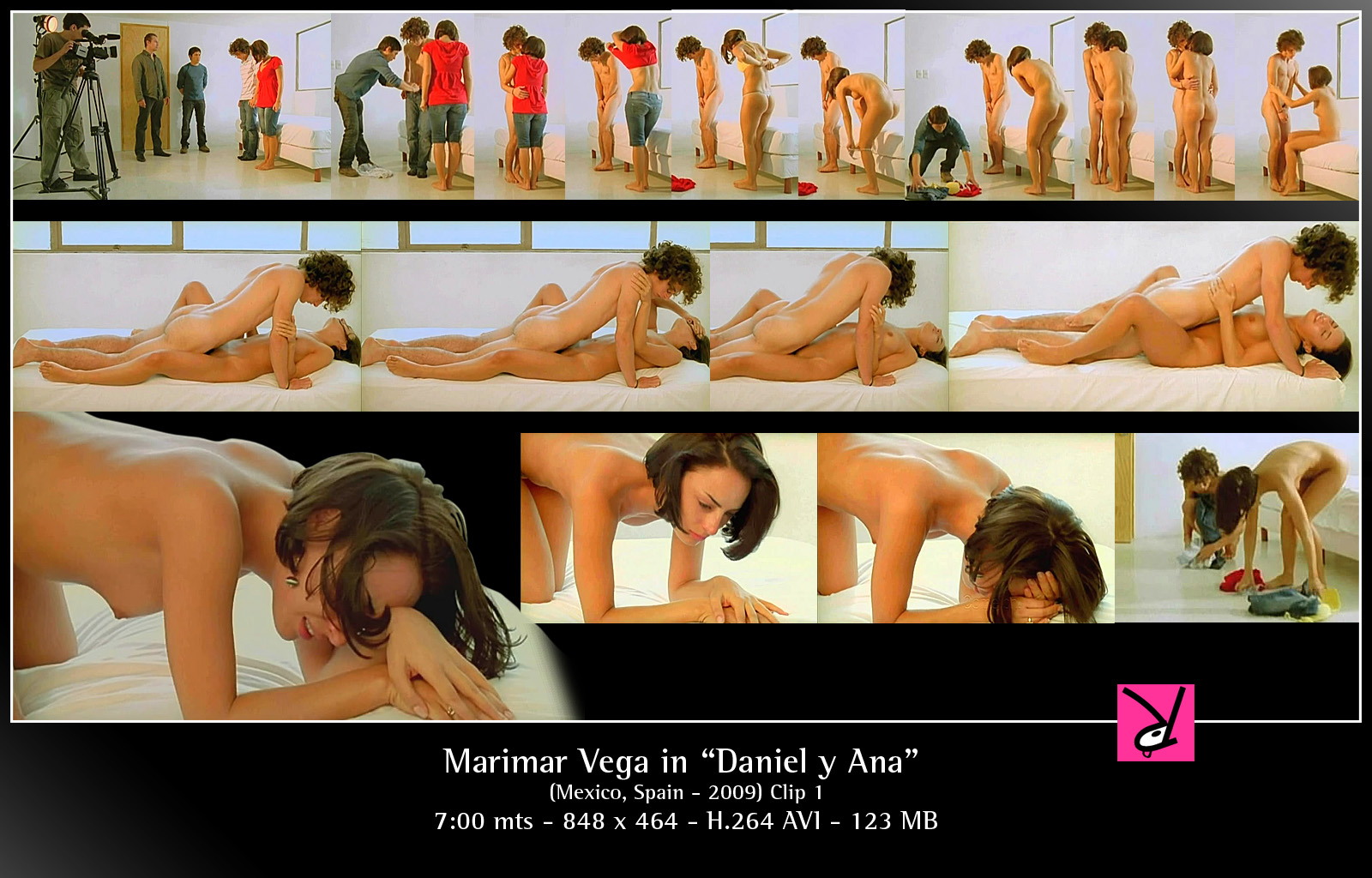
Marimar Vega in “Daniel y Ana” [Mexico, Spain 2009]

Mexican director Michel franco’s first full length feature, “Daniel y Ana” [Eng. Title: Daniel & Ana] is a pretty low-key affair, even if it has some rather dramatic moments. Apparently based on a true story, his realistic filmmaking – virtually devoid of cinematic embellishments – works very well leading into the crucial stages of the film, as the audience are suddenly woken by shock at the unfolding drama.

I’m not going to write too much about the shocking event that changes brother Daniel and sister Ana’s lives. While on a shopping trip, they get kidnapped. The rest of the film is about the siblings trying to recover from the extreme trauma caused by the event following the kidnapping, where they could turn to no one in their own family for help, before Ana finally seeks the services of a psychologist.

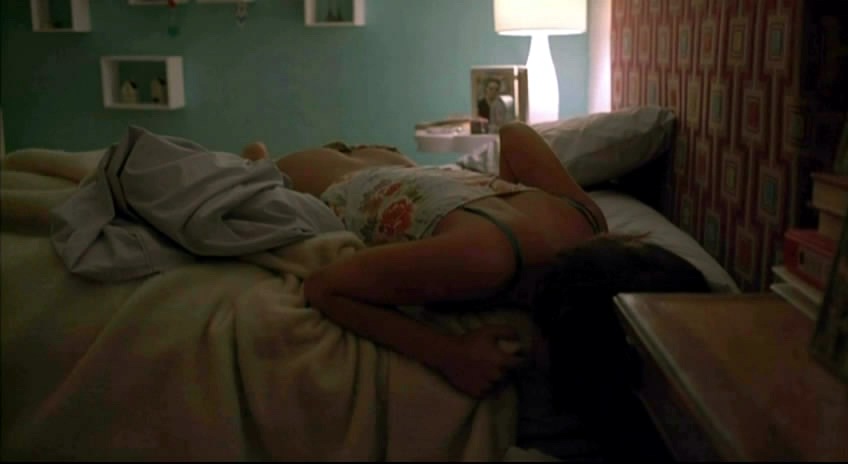
Marimar Vega plays the Ana character quite convincingly, as does her brother Daniel – their slightly underwhelming display of emotions only adds to the realism which makes the event even more shocking. These scenes were cut from a DVD, the second scene is too dark to be greatly improved upon, without noticing visible noise and banding.

Scene 1:

Scene 2: 

.

Continue reading

Posted in Latin America, Mexico, Michel Franco, Spanish Cinema | Tagged , , , , , , | 3 Comments