 It is difficult to know the extent to which director Achim Bornhak had a say in the creative rather than technical aspects of his film biopic – about the model, actress, groupie, and legendary sex-icon of the ‘1968 generation’ Uschi Obermaier, “Das wilde leben” [Eng. Title: Eight Miles High]. This is not only due to the script’s reliance on Ms. Obermaier’s autobiography “High Times”, but also because the very icon was even involved in the film’s making. Since I’m neither from her generation nor have read her biography, I shall restrict my observations to the screenplay, performances and production values as witnessed in the film.
 The two-hour long drama starts off with a teenage Uschi (Natalia Avelon) leaving home with her pal Sabine (Friederike Kempter), after the former has a row with her strict parents following their discovery of professional nude photos of their daughter. The girls hitch a ride with a group of hippies on their way to Kommune 1 in Berlin.
 That’s where Uschi meets Rainer Langhans (Matthias Schweighöfer), right in the middle of shooting the iconic photograph that Kommune 1 will henceforth be associated with. They become lovers and Uschi, already a well-known model, inadvertently becomes the ‘face of the revolution’ and figurehead for a political ideology in which she had little interest in. What she liked most was the Bohemian lifestyle that came with living in the commune – one that saved her from “turning into her parents”.
 Uschi’s personality and good looks will draw the attention of famous rock stars such as Jimmy Hendrix, Mick Jagger, and especially Keith Richards (Alexander Scheer) – with whom she will have more than a passing fling. Soon she’ll be spoilt for choice between groupie high-life and the commune.
 That is when she learns about a wealthy adventurer named Dieter Bockhorn (David Scheller) and instantly falls in love, the same way that he too does after looking at her pictures in a magazine. They get on like a house on fire when they eventually meet, and Uschi leaves Kommune 1 to live with Bockhorn soon after.
 After a brief separation following an argument, they reunite and set-off around the world in a customised Mercedes bus that’ll keep them on the road for the best part of a decade, with photojournalists catching up with them wherever they went. From here on, the film also takes a more serious turn by focusing upon some poignant moments in their relationship.
![Natalia Avelon and David Scheller in "Das wilde leben" [2007]](https://thirstyrabbit.com/wp-content/uploads/2015/05/Natalia-Avelon-and-David-Scheller-TR-Das-wilde-leben-300x168.jpg) Particularly so after their ‘symbolic’ marriage in India – while Uschi reluctantly agrees to the wedding as some kind of ‘performance’ to appease their Royal hosts, Bockhorn certainly appears to have taken their marriage more seriously. Uschi will have a miscarriage, and their journey together will come to an end after Bockhorn is killed in a road accident while in Mexico. Much of the film is told as flash-back against a grieving Uschi watch Bockhorn’s burning pyre float into the sunset.
Particularly so after their ‘symbolic’ marriage in India – while Uschi reluctantly agrees to the wedding as some kind of ‘performance’ to appease their Royal hosts, Bockhorn certainly appears to have taken their marriage more seriously. Uschi will have a miscarriage, and their journey together will come to an end after Bockhorn is killed in a road accident while in Mexico. Much of the film is told as flash-back against a grieving Uschi watch Bockhorn’s burning pyre float into the sunset.
 The actors portraying the three main characters; Uschi, Rainer, and Bockhorn give a good account of themselves, and Natalia Avelon, the babe that she is, even emanates the sexual charisma that Uschi was renowned for. She could do much worse than improve over time as a seasoned actress. While the cinematography is appealing, it is the excellent attention to set design, costumes, and that awesome bus that lingers in our memory. Even though she’s now a best-selling author and successful jewellery designer, Uschi Obermaier’s former life was nevertheless as eventful as any worth bringing to cinema, and that’s what the film focuses on, from her own perspective. The Making-of documentary features a present-day Uschi revealing her thoughts and involvement in the making of the film. However, the star of this above average film is Natalia Avelon, and at least for her naked splendour, it is Recommended Viewing..!
Amazon.de DVD Link [PAL]
Among the featured DVD extras are a Making Of documentary, some deleted scenes, and the official music video for a version of ‘Summer Wine’ recorded by Ville Valo and Natalia Avelon herself – and she can sing..!
The Nudity:
Matthias Schweighöfer, Heike Warmuth, Natalia Avelon, Alexander Scheer, & others
The film features intermittent scenes of male and female nudity, but none in as many scenes as the gorgeous Natalia Avelon. However, the longest continuous frontal exposure belongs to a brave Matthias Schweighöfer.
![Natalia Avelon, Matthias Schweighöfer, Alexander Scheer, Heike Warmuth, and others nude in "Das wilde leben" aka "Eight Miles High" [2007]](https://thirstyrabbit.com/wp-content/uploads/2015/05/Natalia_Avelon__others-TR-HQ-Das_wilde_leben-1024x494.jpg)
Scenes of Natalia Avelon, Matthias Schweighöfer, Alexander Scheer, Heike Warmuth, and others from the German biopic of Uschi Obermaier, “Das wilde leben” aka “Eight Miles High” [2007].
.
Continue reading →

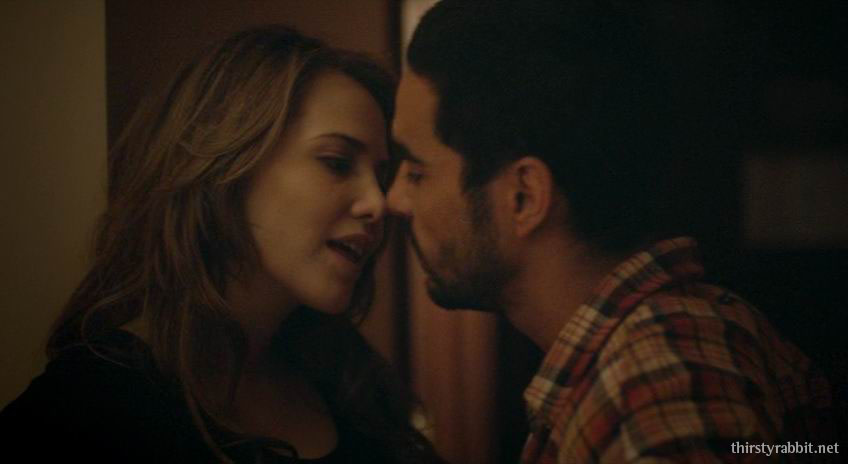 Amanda (Letícia Colin) and Bruno (Caio Blat) meet by chance when their flight to São Paulo gets diverted to a different airport due to bad weather. Coming from vastly different backgrounds, they were otherwise quite unlikely to have crossed paths; while she’s an ambitious executive in a major ad agency steadily climbing up the corporate ladder in São Paulo, he’s the laid-back creative-type still figuring out what to do with life in down town Rio.
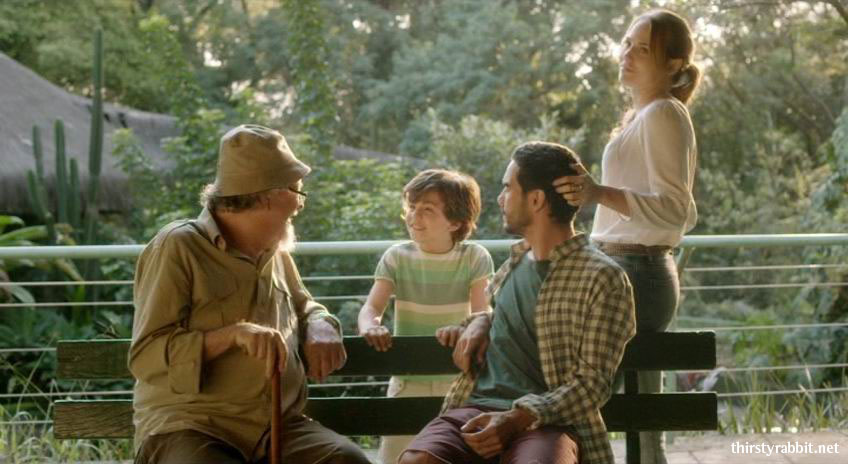 A one-night stand in the hotel they’re accommodated in will lead to further ‘chance’ encounters between the two in both São Paulo and Rio, and as Amanda gets to know Bruno better, a tentative romance blossoms. Bruno, visiting São Paulo to reconnect with his estranged but now bedridden father will learn that he also has a half brother young enough to be his son, and before he could come to terms with it, the little boy will become his responsibility.
 All this is big change for Bruno, and when Amanda declares her interest in helping him build a career, it becomes too much for him to take, as he feels burdened by others’ expectations. He disappears for a while, and refuses to answer Amanda’s calls and frantic messages.
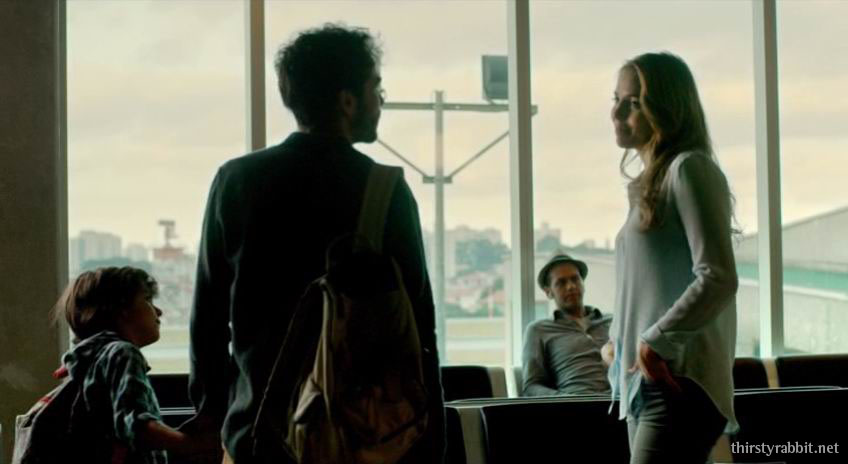 After holding a successful show of his own artworks, Bruno meets Amanda again at an airport lounge, just as they had met for the very first time – by chance, and just as they rued missed opportunities in nurturing what they had going, they also leave a door open for reconciliation and a possible reunion. I’m sorry if I’ve thrown away an explicit spoiler while describing the storyline, but I could see this coming from miles away and wasn’t at all surprised when it ended the way it did. It is a typical mainstream film with a mainstream ending. But I have no doubt that some would love the film to bits – after all, it has some rather likeable faces, featured in interesting locales, and boasts some pretty decent production values.


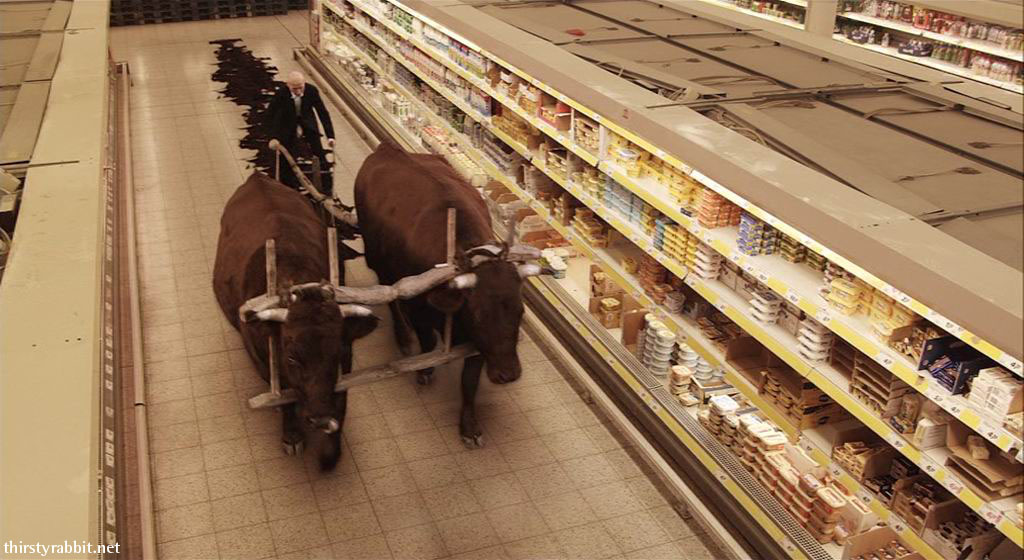
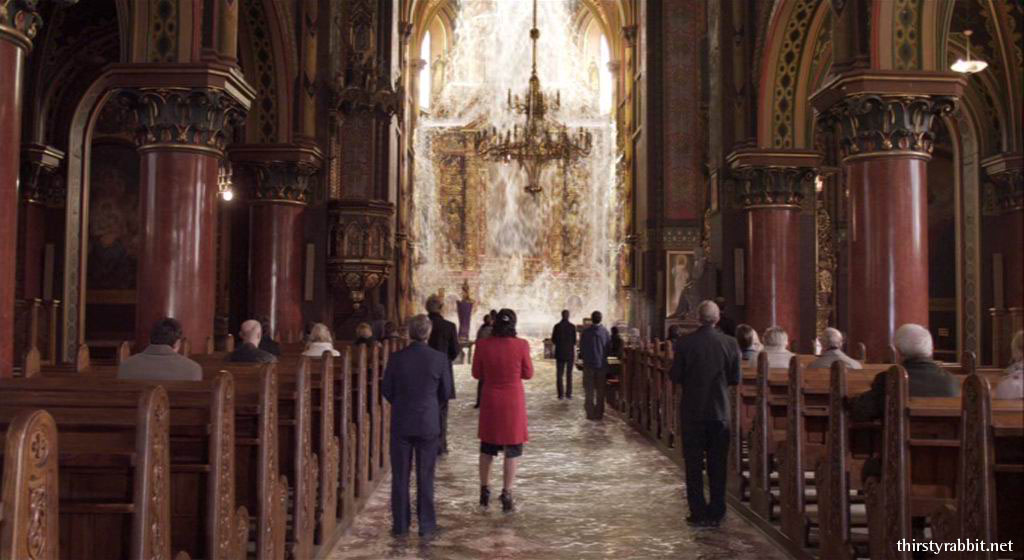

![Ewa Matula and Anna Mielczarek nude in "Onirica" aka "Field of Dogs" [2014, Poland]](https://thirstyrabbit.com/wp-content/uploads/2015/06/Ewa_Matula__and__Anna_Mielczarek-TR-HQ-Onirica.jpg)


![Natalia Avelon and David Scheller in "Das wilde leben" [2007]](https://thirstyrabbit.com/wp-content/uploads/2015/05/Natalia-Avelon-and-David-Scheller-TR-Das-wilde-leben.jpg)

![Natalia Avelon, Matthias Schweighöfer, Alexander Scheer, Heike Warmuth, and others nude in "Das wilde leben" aka "Eight Miles High" [2007]](https://thirstyrabbit.com/wp-content/uploads/2015/05/Natalia_Avelon__others-TR-HQ-Das_wilde_leben.jpg)


![Mariam Buturishvili nude in "Simindis kundzuli" aka "Corn Island" [2014, Georgia]](https://thirstyrabbit.com/wp-content/uploads/2015/05/Mariam_Buturishvili-TR-HD-Simindis_kundzuli.jpg)


 |
| 
